

Key takeaways
- Trends in the photography industry include artificial intelligence, phone or mobile photography, drone photography, and a sustainability focus
- Occupations related to photography are available in industries such as:
- Creative agencies
- PR firms
- Marketing agencies
- Commercial products
- Real estate
- Fashion industry
- Entertainment industry
- Media and communication
- Biosciences and chemistry
- Architecture
- Event management
- Different types of photography careers offer opportunities in freelance, contractual employment, and full-time work at large corporations
- The highest-paying job, according to Indeed, is a photography professor
- The highest-paying job type for photographers, according to Zippia isa freelance photographer
- Formal education such as a bachelor’s degree, is not essential for photography careers, but helps boost job opportunities
Getting started…
Photography used to be a specialized field in the past. However, today it has evolved and become much more advanced and popular amongst people from all walks of life. The industry is rapidly changing with new technologies coming to the surface, such as drone cameras and top-notch cameras in mobile phones.
If you are in the middle of your college planning and require some degree of advice, it is best to start looking for digital photography trends and market situations. These statistics will tell you how volatile the industry is, what skills and competencies it requires, and whether you should pursue a digital photography degree.
Interestingly, photography jobs are different from mainstream careers like human resources. The employers are different, and the field is overall more leaned toward artistry and aesthetics than business-focused skills.
In this guide, we take a look at photography careers and what different photography occupations you can look for. Take a look at careers with a photography degree!
Summary – photography occupations and careers
| Trends in the photography industry |
|
| Highest paying photography jobs |
|
| Types of photography jobs |
|
| Top colleges for a bachelor’s degree in photography |
|
| Certifications and courses for photography professionals |
|
What are the emerging trends in the photography industry?
Centuries ago, photography was a tedious task that required hours on end to complete. However, with digital technologies like DSLRs and advanced sensors, photography has become much more instant, quick, and convenient. Without a doubt, getting a digital photography degree now is much more in demand than it used to be.
With so many changes happening in the industry, digital photography jobs are also extremely dynamic. Therefore, you should keep up with industry trends and data to make informed decisions in your academic and professional career.
When searching for colleges offering a digital photography degree, make sure you are exploring the industry in depth. This exploration will tell you what kinds of jobs are on the rise, what colleges are offering the best photography degrees, and whether the industry is right for you.
- Most photography jobs require a minimum of a high school diploma, but give preference to college degrees
- BLS predicts that photography employment will grow by 4% by 2029
- California is one of the states with the highest number of photography employment opportunities
- San Francisco had the highest pay scale for photographers in 2023
- In 2022, 46% of the photography workforce were women, and 54% were men
Artificial intelligence
We cannot deny the role of technological advancements, particularly in artificial intelligence or AI, in taking over most industries. More and more fields and industries are now incorporating the use of AI, and leveraging its many benefits. This is true for digital photography as well.
In addition to this, AI-powered editing tools, image processing, image sorting, face recognition, and other such tools have empowered photographers. These tools do not replace the process of taking photos in real time. However, they are a huge part of the post-production process.
Additionally, AI-driven tools are focused on solving problems such as bad resolution and improper compositions. These advanced tools fix such issues for photographers in no time. However, the important thing here is that while AI is readily available, it is changing the job market and landscape.
Photographers now have another skill to add to their list. They must have a good grip on these AI tools and use them to their advantage. Some employers require photographers and creative professionals to be able to work with AI.
Phone photography
You must have heard of Galaxy S23 Ultra, Google Pixel 8 Pro, and iPhone 17 Pro Max, and other such advanced phones competing for the best camera technology. Undoubtedly, these phones have taken the market by storm by adding some of the most powerful camera lenses.
Therefore, phone photography is now a popular sub-branch of digital photography. These phones have been used for experimental photography of many sorts. For example, 4K videography, phone-shot short films, and extremely high-quality portrait photography have already been explored with phones.
Moreover, smartphones are equipped with advanced camera technologies, such as multiple lenses, optical zoom, and computational photography features, making them powerful tools for casual and even professional photography.
Drone/aerial photography
One of the latest and most successful trends in the photography industry has been drones. This is a highly specialized field of photography, and requires certifications, a license, and other requirements to be fulfilled.
Moreover, drones are high-tech cameras that come with really top-notch gear, such as remote controls and sensors. Drones are mostly used for aerial shots, still images, and motion pictures. However, the high costs associated with drone equipment are often a challenge for newcomers in the industry.
One of the industries that has seriously adopted and utilized drone photography is real estate. They use drone photography to showcase properties from aerial views. This method highlights features like landscaping, neighborhood views, and property layouts more effectively than traditional photography. Sources suggest over a 19% increase in market share of drone photography by 2029!
Sustainability in photography
The environmental impact of photography extends across various stages, including production, usage, and disposal of equipment, as well as the practices involved in printing and presenting photographs. Traditional photography processes, especially film photography, have historically involved chemicals and materials that can be harmful to the environment.
While digital photography has mostly replaced traditional photography practices, there are parts of it that can significantly impact the environment. For example, one-time-use batteries are harmful if not disposed of carefully. Repurchasing these batteries leads to more waste and overconsumption.
Increasing focus on choosing alternative, eco-friendly practices is also impacting the photography industry. For example, there are manufacturers actively trying to use recycled materials for packaging and camera construction.
Using alternative energy means, such as solar energy for lighting equipmen,t is another way of reducing power consumption. Overall, as the conversation around sustainability grows, it’s likely that we will see more innovations aimed at reducing the environmental impact of photography.
List of photography occupations and jobs you can explore
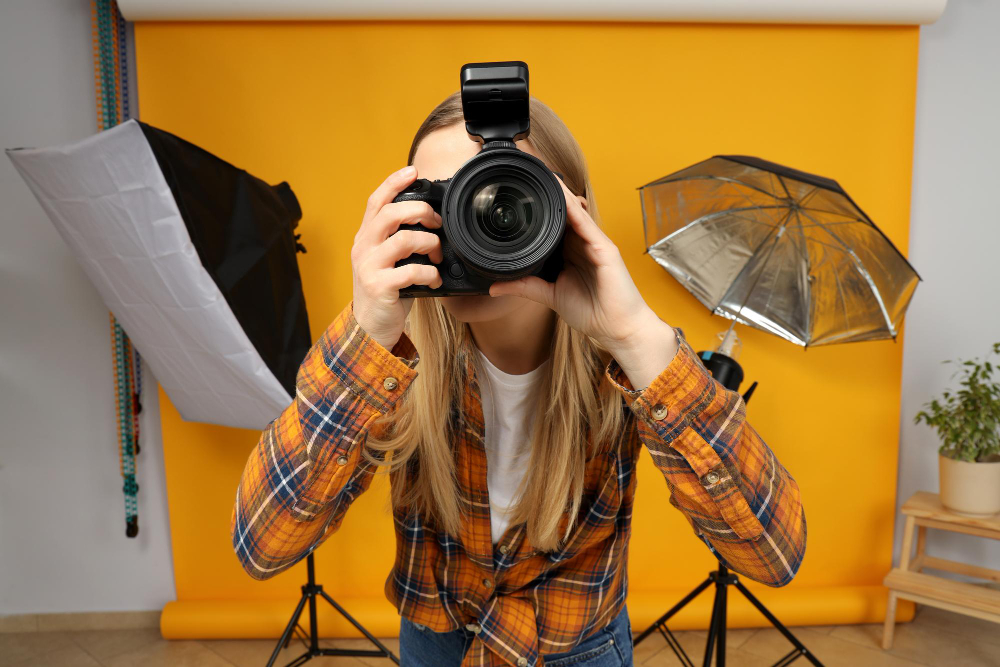
You can explore several careers that involve photography, whether you decide to work as a freelancer or a full-time employee. This section discusses types of photography jobs and more.
Highest-paying photography careers
According to Indeed, the highest-paying photography careers and photography occupations:
| Job role | Average salary |
| Photojournalist | $39,564 per year |
| Photo editor | $49,965 per year |
| Wedding or event photographer | $43,335 per year |
| Video editor | $52,316 per year |
| Photography professor | $61,014 per year |
| Lighting technician | $56,351 per year |
Note: Data is as of January 2026
Types of photography jobs
In straightforward or mainstream industries, the type of jobs you can find is also simple. For example, a business graduate may become an entrepreneur or work in administrative roles, while a marketing professional works in the marketing or advertising departments. For photographers, the career paths are diverse and have lots of variation.
Firstly, most beginners in the photography industry work in entry-level roles such as small businesses and gig-based employment. For those seeking more professional experience, photography internships are also a great option. Moreover, beginners can work in assistance roles where they get hands-on experience. Furthermore, there are three broad types of photography jobs that you might be interested in. These are:,
| Freelance photography | Contractual or gig-based | Full-time in-house photography jobs |
|
|
|
Job roles with a photography degree
There are various job roles you can find as a professional photographer. These are:
| Core photography jobs | Specialized photography job roles | Supporting and post-production roles |
|
|
|
Read more: Photographer career description — Job responsibilities, roles, and work environment
Education requirements for a photography career
““
To find good and prestigious digital photography jobs, you must be in possession of certain qualifications and education standards that set you apart from the competition. Some of the various qualifications you can try getting include the following.
Formal education – college degree in photography
One of the best ways to stand out in a saturated field like photography is to get a formal degree in photography or a related field. For that, a college degree from on-campus or online colleges are excellent option.
Keep in mind that working as a photographer does not necessarily require a formal education. However, having a college education can help you land high-paying jobs or even explore several other career paths, such as opening up a photography business.
In addition to this, a college degree lets you build a strong professional network, find mentorship, and work with advanced equipment labs that help you develop practical skills. You can explore a variety of colleges offering photography majors. These include:
| College/University | Private/in-state tuition | Non-state resident tuition |
| Massachusetts Institute of Technology | $64,310 | $64,310 |
| Stanford University | $67,731 | $67,731 |
| Yale University | $69,900 | $69,900 |
| New York University | $72,082 | $72,082 |
| University of California, Berkeley | $17,478 | $55,080 |
| Taylor University | $51,918 | $51,918 |
| University of Kentucky | $13,908 | $35,164 |
| Washington University | $68,240 | |
| University of Connecticut | $17,010 | $39,678 |
| Oklahoma State University | $13,920 | $29,440 |
Note: data is as of January 2026.
For online schools to start your photography career, you can explore options like:
| College name | program name | Tuition cost |
| Rocky Mountain College of Art & Design | Online Bachelor of Fine Arts – Photography | $20,400 per academic year |
| Southern New Hampshire University | Bachelor’s in Digital Photography | $342 per credit |
| Arizona State University | Online Bachelor of Fine Arts in Art – Digital Photography | $13,118 for in-state
$16,376 for out-of-state (source) |
| Liberty University Online | BS in Digital Design – Online Photography Degree | $390 per hour |
Note: data is as of January 2026.
Read more: Photography degree potential – Photography occupations, ROI, & more
Certifications and courses
Other than formal education, you can also check out many additional courses and certifications. These can be perfect for complementing your formal education, as well as for enhancing your portfolio. In some cases, employers might require you to have these certifications.
Moreover, the best part about certifications and courses is that you can find them at affordable rates, but they are still taught by some of the most credible industry experts.
Here are some digital photography courses you can get started with:
- Certified Professional Photographer (CPP) is offered by the Professional Photographers of America (PPA).
- Platforms like Coursera offer courses, certifications, and specializations in digital photography, including basics of camera use, post-processing techniques, and specialized topics.
- Udemy hosts a wide range of photography courses and certifications that are recognized industry-wide.
- Short-term certificate programs are available from institutions like the New York Institute of Photography.
- Adobe Certified Expert (ACE) certification focuses on Adobe Photoshop and Lightroom, along with other software and essential tools for digital photographers.
Read more: How can photography and editing classes prepare you for a digital photography career?
Frequently asked questions
Where do photographers work?
Photography jobs require you to work in a diverse range of settings and environments. Most typically, whether you work as a freelance photographer or an in-house photographer, you will be required to travel to the client’s shoot location. In other cases, you may be working on your own or a rented/third-party studio space.
Moreover, certain photography specializations require you to work in labs, such as for scientific or bioscience photography. In addition to this, aerial photography jobs may be more outdoor and have an open work environment. If you work as a photojournalist, the work environment can be frequently unpredictable and challenging, while also finding some work in press rooms, offices, and newsrooms.
What to major in if you like photography?
If you like photography, you can start your career by opting for self-teaching techniques. For example, online tutorials, in-person workshops and short courses, and online certifications are a great way to learn photography yourself. On the other hand, if you wish to pursue a photography degree, you can explore options such as:
- BA/BFA in photography
- BA/BS in media communication
- BA/BS in graphic design
- BS in marketing
- BA/BS in film studies
Is photography a hard career?
Yes, photography can be a hard career for several reasons. For example, there is an intense need for photographers to constantly learn and adapt with new technologies so you can stay relevant in the industry. As a result, new challenges are constantly appearing in the industry. In addition to this, photography degrees and majors are now becoming part of mainstream education. As a result, the industry now has a lot of competition that makes it difficult for people to succeed as a photographer.
Furthermore, photography careers can have demanding work environments. For example, shoots occur at odd hours, and can last for long durations. Moreover, the shoot locations have their own challenges, such as extreme weather or security concerns. You also have to frequently commute or travel to various types of shoot locations that make it slightly more challenging than simple 9 to 5 jobs.
What kind of photography is most in demand?
In recent years, the most popular and in-demand photography career is in digital marketing, event/wedding photography, and commercial/product photography. In some cases, real estate photography is also known for being high in demand. On the other hand, aerial or drone photography is known to be one of the highest-paying photography jobs due to its highly skillful and technical nature.
Get started with your digital photography career!
In conclusion, photography occupations are endless and impressive. Even if you are a fresh graduate, you can explore a ton of highest paying photography jobs. Moreover, photography offers a meaningful and evolving career path, rich with opportunities for those passionate about capturing and creating visual art. The field has been transformed by advancements in technology, such as DSLRs, smartphone cameras, and AI-powered tools, making photography more accessible and versatile.
However, technological advancements also now require photographers to keep up to date with a rapidly changing industry. They must also possess some important skills that go beyond simply capturing images.
While challenges like market saturation and rapid technological changes exist, they also create avenues for growth and innovation. Therefore, photography occupations are not outdated, old, boring, or repetitive. This is one of the biggest reasons so many new and young minds are now attracted to photography careers.