
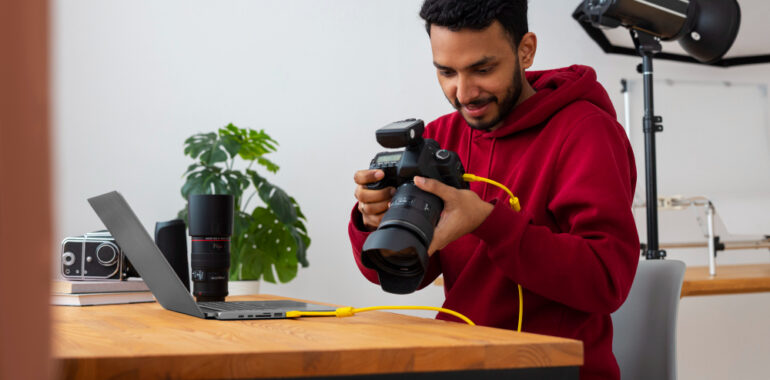
Key takeaways
- Things you need to start as a photographer:
- A unique photography style that speaks for you
- Equipment and professional photography gear
- A professional undergraduate degree in photography or a related field
- An impressive photography portfolio to capture clients
Getting started…
Many young and motivated individuals are dedicated to doing something that not only makes them money but also fulfills their desire to be creative and meaningful. This is why more and more people are turning towards artistic and creative fields like fashion, fine arts, and photography.
However, the digital photography field of work is quite a balance between creative as well as technical capabilities. With advancing technology every day, photography has become much more complex and multi-layered. Therefore, many people often need to stop and think about how to start as a photographer.
With so many different types of photography existing – wildlife photography, photojournalism, street photography, and event photography—the options are endless yet confusing. In this beginner-friendly guide, we talk about the important steps you can follow to finally start as a photographer. Let’s read more!
Overview – How to start as a photographer?
| Types of photography |
|
| Photography degree – what is it? | A 4-year college program that teaches students the fundamentals as well as professional-level skills and techniques used in photography |
| Photography business ideas |
|
5 things you can do to begin a photography career
Every individual’s professional journey is different. What works for someone might not work for you, and vice versa. However, we follow industry data and trends to understand what really matters in today’s landscape.
Moreover, there are general guidelines and paths that govern a particular career such as a photography career. So, let’s have a look at fail-proof ways and steps that ensure you begin a photography career successfully.
Get a professional degree
It is already known by everyone that photography is a specialized skill that many people often self-learn. They develop this skill through various means and platforms, including in-person coaching and mentorship, as well as through online means such as YouTube tutorials and so on.
While these are great for learning the basics and knowing how to run a camera, a professional education in this field is still undefeated.
In particular, a college bachelor’s degree in photography or digital photography is one of the go-to options for those who wish to excel in this career path. In fact, many photography contract jobs require a college degree from their candidates.
There are multiple types of photography degrees include:
- Associate’s degree: a 2-year program
- Bachelor’s degree: a 4-year program
- Master’s degree: a post-grad advanced program
In addition to this, many employers—including in full-time employment as well as freelance gigs – consider a professional bachelor’s degree as credible proof of someone’s capabilities. So, the first thing you should do to start your photography career is enroll in a good college degree. Here are some options to explore:
| College name | In-state resident tuition — per academic year | Out-of-state tuition — per academic year |
| Massachusetts Institute of Technology | $64,310 | $64,310 |
| Stanford University | $67,731 | $67,731 |
| Yale University | $69,900 | $69,900 |
| New York University | $72,082 | $72,082 |
| University of Arizona | $13,900 | $43,100 |
| University of California, Berkeley | $17,478 | $55,080 |
Note: data is as of January 2026.
Read more: Guide to a photography college majors
Identify your unique photography style
Cultivating your passion for a photography career is important. You need to really dig deep into what your photography style is in order to create meaningful work. Moreover, there are so many different photography styles that you can easily find your calling and pick that specific line of work.
Since you are a beginner, this is the ideal time to start exploring what your work and creative identity is going to be about. While individual styles and preferences can vary, the most popular photography styles and niches are:
- Wildlife or nature
- Portrait
- Fashion
- Product and advertising
- Wedding photography
- Corporate photography
- infant/baby photos
- Videography
- Fine art
- Food photography
- Street photography
- Aerial photography
Once you pick your style and photography niche, you should focus on learning the fundamentals. Keep in mind that a bachelor’s degree also has several streams and emphasis areas. Therefore, it is important to pick a concentration track and focus on learning the fundamentals.
Invest in equipment
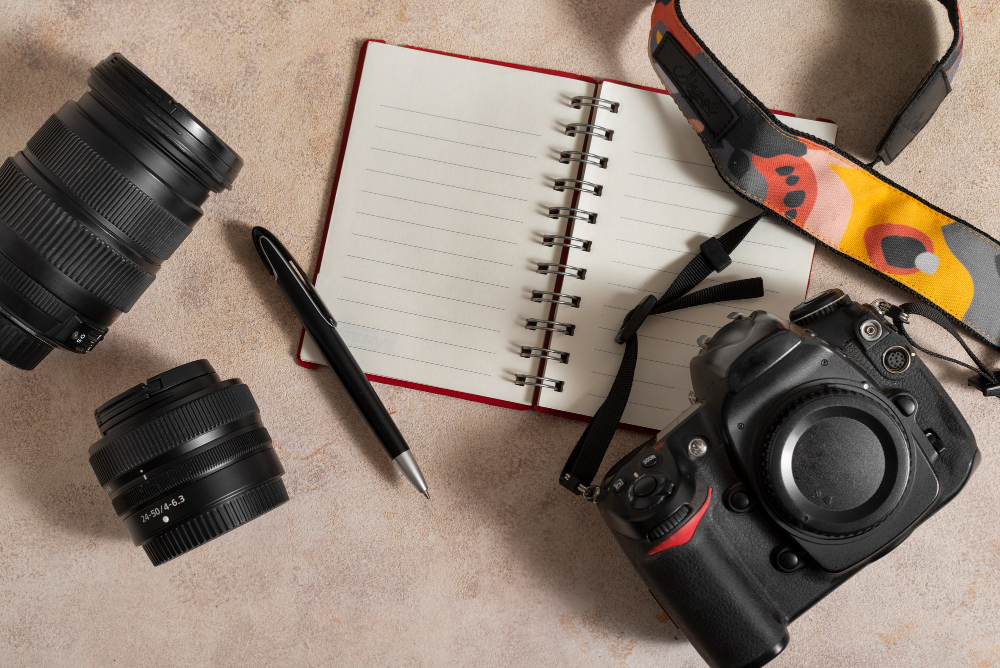
Now, it goes without saying that a photography career is rather incomplete without the right equipment. It is nearly impossible to practice this skill and offer professional photography services if you do not have equipment such as cameras and lighting gear.
Therefore, once you have enrolled in a photography college program or picked your niche or photography style, it is important to invest in some equipment. So, if there are financial constraints, you can start with a basic camera body and basic lens such as a kit lens and a 50 mm zoom lens.
A simple Canon or Nikon camera will go a long way during the early stages of your photography career. Furthermore, instead of investing in equipment like lights and reflectors, we recommend purchasing items like memory cards and backup batteries.
Once you have polished your skills or learnt camera handling, you can move towards lighting equipment. On the other hand, if you are getting a photography degree from a college, you can also explore the equipment facilities offered by the college.
Build a portfolio
As you progress in your photography career, there will be a rising need for a professional-looking portfolio that speaks for you. Therefore, it is best to start working on the portfolio early on. Compile all your practice or paid work in one document, be it digital or printed.
You can explore tons of options and formats for your portfolio, such as creating digital portfolios with platforms like:
- Picfair
- Zenfolio
- Google Drive
- Wix websites
In the portfolio, make sure to add a detailed overview of the work you have done, with visuals that simply attract potential clients. Many young and aspiring photographers skip this step that causes them a lot of trouble in the later stages of their career. So, if you are looking for one golden answer to “how to start as a photographer”, then building a portfolio is something you will swear by.
Tips on how to become a successful photographer?
Practice your art
Photography is an extremely practical work that requires you to remain hands-on even if you are a business owner or senior member of the organization. It is an art, as well as a skill that has to be polished and refined constantly. In addition to this, photography is a field of work that is consistently evolving with the advancements in technology. Therefore, to keep up with these advancements, practicing your art rigorously is very important. Furthermore, practicing your art also gives you an excellent chance to add something more to your portfolio.
Networking and creating connections
In any competitive field such as photography, you need a strong professional network. Do not expect to find well-paying photography contract jobs and freelance gigs if you do not outreach people and work tirelessly to expand your professional circle. Therefore, spend some time interacting with like-minded professionals, connect with industry leaders and experts, and join professional forums.
Moreover, you can attend events such as conferences and brand launches to find potential clients and collaborators. Another example of networking for work can be if you are working as a photographer at a wedding or corporate event, give the guests your professional card and have a quick chat with them.
Lastly, make sure to keep in touch with your old clients through gentle reminders and follow-ups so they can recommend you further.
Market research and analysis
A huge part of establishing yourself as a successful photographer in the industry is understanding the market you are working in. There are numerous people in the market that have an impact on how you perform and stand out in the industry.
Firstly, research and analyze what the target audience is like. Explore what problems they are facing and what kind of solutions you can offer as a photography professional.
Moreover, look into how your competition is working, such as competing freelancers or photography studios. Analyze how they are different from you, what are their weak points are, and what kind of alternative can you offer.
In addition to this, the age of digital social interaction platforms has made things much more complex and detailed. Now, trends change every day. For example, when Instagram was a newly-launched app, still images and selfies were in. However, today’s digital landscape is all about short-form video content.
Not only that, but with advancing camera technology in mobile phones such as the iPhone 17 Pro Max, mobile photography has also become a legitimate form of photography. Therefore, keeping track of and evolving with the industry trends is very important.
Getting mentorship
Just like a professional qualifications, mentorship is also not essential or a requirement for starting as a photographer.
However, it is one of the few things that can truly make you well-versed with the craft and also stand out in the industry. You can seek mentorship from any senior photographer, such as:
- Your photography school teachers
- Your bosses and managers at work
- Older and senior photographers
These people not only teach you how to capture the most beautiful photographs, but also help you problem-solve and deal with career challenges. In addition to this, potential employers will be much more confident in your services as they will have a sense of peace, considering you are mentored by such seasoned professionals.
Related: Find excellent photography business ideas
Frequently asked questions
How to become a licensed photographer?
There are no strict licensure rules governing photographers in the USA. Therefore, you don’t need any official license. However, you can get internationally recognized certifications and qualifications that can help you validate your skills and capabilities. To become a credible and professional photographer in the US, start by getting a relevant college degree.
How much do beginner photographers get paid?
The average salary or pay scale varies due to factors such as education level, qualifications, experience, and the state or city you are working in. Moreover, the size of the employer, as well as the type of employment, also affects how much you can make as a professional photographer. However, for a general estimate, here are the average pay and salary data found by BLS:
| Average annual salary for photographers | $ 53,380 |
| Industries with the highest levels of employment |
|
| The highest spying state | District of Columbia, $88,540 annual salary |
Can I start a photography business?
Yes, definitely. You can start a photography business if you:
- Are a trained or experienced photographer with ample skills and technical knowledge
- Have business acumen through a business degree or other qualifications
- Have investment for large-scale equipment and other facilities
- Have a unique business idea that can solve a problem for a particular audience
Is it difficult to learn photography?
Learning the fundamentals of photography is not inherently difficult but it can become challenging as you try to master on specific form of photography and try to exceed industry expectations. There are multiple aspects of photography that you need to become an expert in, such as:
- Composition
- Editing
- Camera handling
- Working with various lens lengths
- Setting exposure and aperture
- Mastering lighting
- Using advanced gear
So, while you can learn the basics easily, the expert-level skill is developed over the years with practice.