

Key takeaways
- A crime scene investigator plays a critical role in criminal justice by collecting, analyzing, and preserving evidence to support legal proceedings.
- Understanding criminal behavior significantly enhances a CSI’s ability to interpret evidence and reconstruct crime scenes accurately.
- While not mandatory, knowledge of criminal psychology helps distinguish between accidental and staged crime scenes.
- To become a CSI, a relevant bachelor’s degree in forensic science, biology, chemistry, criminal justice, or psychology is essential.
- Hands-on training, certifications, and internships are key to meeting CSI job requirements and advancing in the field.
- Crime scene investigators often work irregular hours, including nights and weekends, based on the complexity of cases.
- The average salary of a CSI agent in the United States is $70,491.
The role of crime scene investigators in the field of criminal justice is an important one. Their contributions shape the way criminal proceedings are conducted and are thus integral to effective criminal justice administration. Typically, the CSI job involves collecting and preserving evidence from the crime scene and analyzing the crime scene itself. However, unlike the stereotypical portrayal of a CSI, their job extends far beyond microscopes and magnifying glasses.
This guide explores how the ability to understand criminal behavior can prove pivotal in crime scene investigations. Moreover, we outline the educational path needed to fulfill crime scene investigator requirements and become eligible for crime scene analyst jobs, crime scene technician jobs, or crime scene examiner jobs.
Read: What is the best online crime scene investigation degree to pursue in the US?
What is CSI?
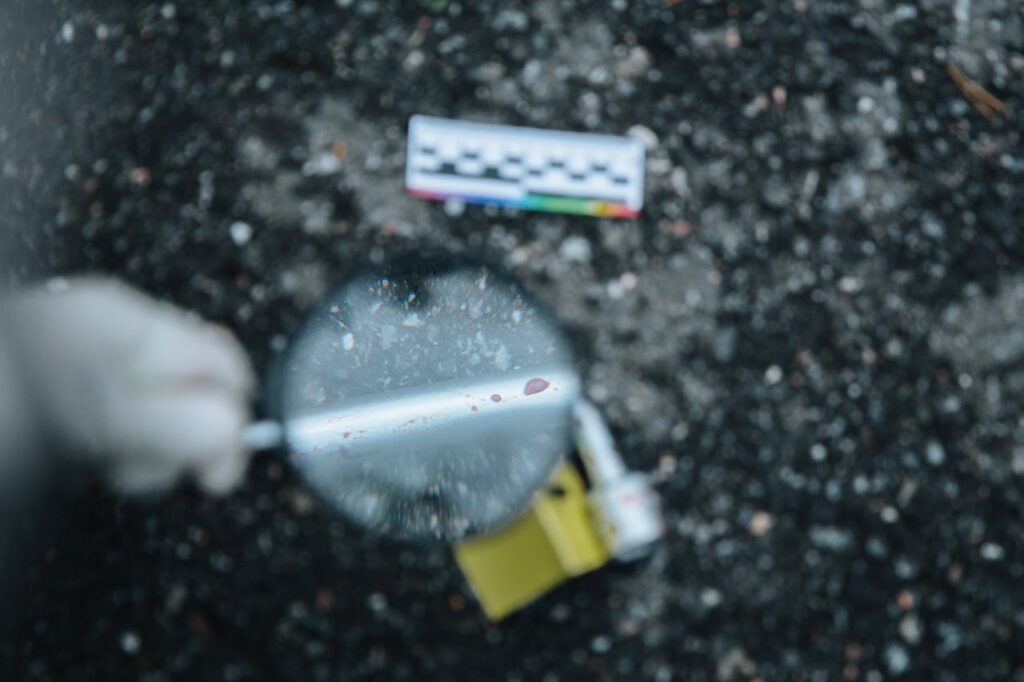
CSI stands for Crime Scene Investigation. It is the practice of gathering physical evidence at crime scenes to determine what happened and who was involved. Professionals in this field are often referred to as crime scene investigators, CSI agents, or crime scene examiners. The field involves the application of scientific principles and forensic techniques to criminal investigations.
Read: What are the top-rate crime and investigation jobs in the USA?
It is a vast field with several specializations in concentration areas, including:
- DNA analysis
- Fingerprinting
- Ballistics analysis
- Toxicology analysis
- Blood spatter analysis
- Digital forensic
- Gunpowder analysis
Through the application of scientific theories and principles, Crime scene investigation specialists aim to reconstruct the sequence of events, document their findings in the way prescribed by law, and present their findings to the court. Analyzing the crime scene and identifying evidence requires more than just good observation skills.
It is a field that requires great skill, not just in forensic science, but also in criminology, as an understanding of criminal behavior can help CSI examiners recreate the crime scene and events accurately.
You may also be interested in: Forensic science and criminology jobs in the USA
What does a CSI do?
The crime scene detective job description is rarely ever the same in two cases. For example, if the detective on a case has a forensic science background, the responsibilities of crime scene investigation may be divided as they are likely to coordinate closely with the crime scene investigator. According to the standard crime scene investigator definition, these professionals are responsible for:
- Outlining the crime scene to prevent contamination
- Processing crime scenes
- Photographing and sketching the crime scene
- Collecting physical evidence
- Preserving it to prevent contamination –
- Documenting findings
- Documenting the chain of custody
- Recreating the crime scene and the chain of events
- Submitting reports to law enforcement
- Testifying in court
While the technical aspects are crucial, understanding why a crime occurred, what motives, patterns, or psychological factors were at play, can significantly influence how evidence is interpreted. A successful CSI does not just look at the evidence and take it at face value. If they find a bullet casing, they will try to determine its trajectory, the positioning of the shooter, their mental condition, the victim’s actions, and even their state of mind.
You may also be interested in: Exploring forensic science and criminology jobs in the USA
This is where understanding criminal behavior becomes an invaluable asset. It not only offers insights into the motivation and psychological condition of a criminal, but also the victim and the witnesses, which can provide valuable insights into what exactly happened.
What is the role of psychology in crime scene investigation?

Even though an education in criminal psychology is not a prerequisite or an outright requirement, it can truly benefit your career as a Crime Scene Investigator. As outlined above, the job of a crime scene investigator is not as black and white as it may appear. They must not only see the obvious but also try to find the hidden by connecting the dots, using raw logic, and a deep understanding of criminal behavior.
You may also be interested in: How does a criminology degree prepare you for the ethical challenges in clinical forensic psychology?
While it’s not a formal requirement, many experienced professionals believe that a solid grounding in criminal psychology can enhance a CSI’s capabilities. Understanding behavioral patterns can help in:
- Anticipating where additional evidence may be found
- Distinguishing between accidental and intentional actions
- Identifying the staging or manipulation of a crime scene
- Narrowing down suspect profiles
For example, a staged burglary scene may appear legitimate at first glance. However, knowledge of behavioral red flags, like undisturbed valuables or selective damage, can alert a CSI to possible deception. These insights often come from studying patterns in criminal behavior through criminal psychology.
Related: How long does it take to become a criminal psychologist?
How to become a crime scene investigator?
If you are passionate about solving crimes, uncovering clues, and love crime documentaries and solving riddles, becoming a crime scene investigator is the ideal career path for you. In this section, we detail the CSI requirements, including the ideal CSI degree to pursue for a career in the field. So, if you are wondering how to become a forensic investigator, how to become a crime scene analyst, a crime scene technician, or how to become a CSI, read on for full details on educational requirements, required coursework, professional training, and more.
Crime scene investigator education requirements
The first step toward a successful CSI career is getting the right education. If you want to pursue a successful career, you need to fulfill the crime scene investigator education requirements. However, a stand-alone crime scene investigation degree is not available. Thus, you need to complete a bachelor’s degree in a relevant field. Some programs that you can pursue for a CSI career are:
- Bachelor’s Degree in Forensic Science
- Bachelor’s Degree in Criminal Justice
- Bachelor’s Degree in Biology
- Bachelor’s Degree in Chemistry
- Bachelor’s Degree in Psychology
[esy_widget widget_id=”980702″]
Do keep in mind that for certain programs, such as a criminal justice degree or a criminal psychology degree, you will need to pursue a crime scene investigation specialization to develop the skills needed for a successful field career. When researching the best degrees for CSI, consider programs that offer interdisciplinary coursework in both science and criminal behavior. A CSI degree that includes forensic psychology, for instance, provides a competitive edge.
Obtain training and certifications
Hands-on crime scene investigation training is another non-negotiable requirement to enter the field. Whether you look at a CSI job description or that of a CSI forensic scientist, you will soon realize it is not a desk job. It is definitely a field job where you will have to visit crime scenes, collect evidence, bring it back to the lab, analyze it, and document and present your findings to the court. Moreover, you may also be called into court to testify and defend your findings.
Many aspiring CSIs attend police academies or forensic science programs offering internships and practical lab experience. Here are some certifications you can explore:
- Crime Scene Investigator Certificate Program at California State University, Long Beach
- Crime Scene Investigation – University of California, Riverside
- Crime Scene Investigation Undergraduate Certificate Degree – University of Central Florida
- Graduate Certificate in Crime Scene Investigation – Stevenson University
- National certification from bodies like the International Association for Identification (IAI) can further enhance your eligibility.
Work Experience
Lastly, you need to gain work experience to qualify for senior-level positions. During the course of your college program or CSI certification, you need to pursue as many internships or hands-on training opportunities as possible. These will help you get entry-level Crime Scene Technician jobs. With more experience, you can go on to roles such as CSI Forensic Scientist, Crime Scene Analyst, Forensic Technician and other supervisory roles.
Related: Is getting a criminal justice certificate online worth it?
How long do crime scene investigations take?
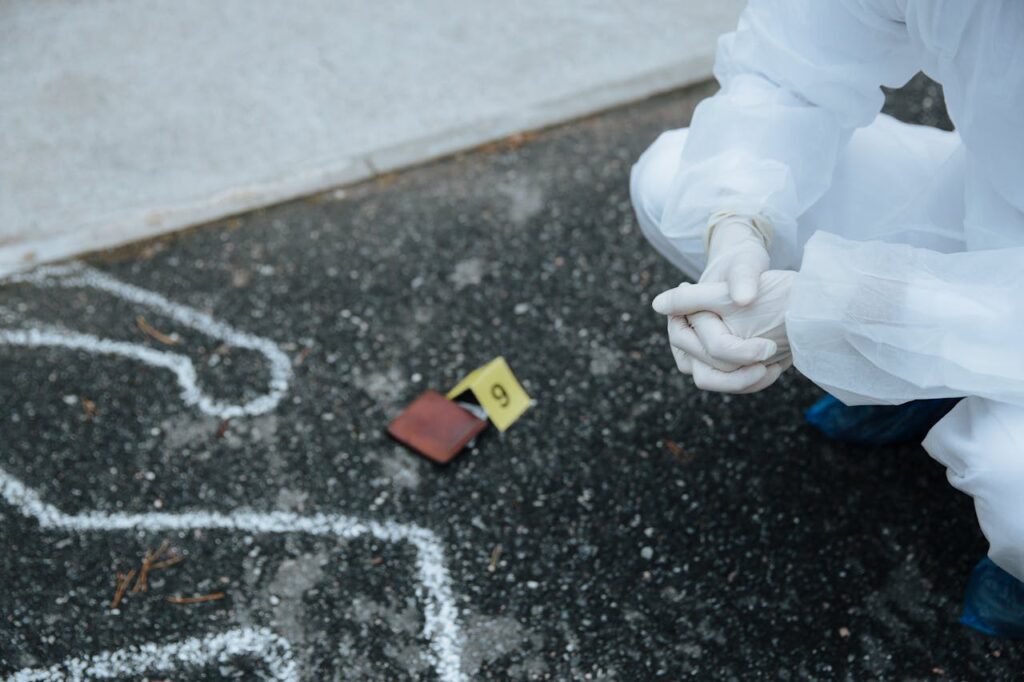
The answer to the question of how long do crime scene investigations take depends on the complexity of the case. Processing a scene may take a few hours to several days. Analyzing evidence and returning lab results can extend the timeline further. A homicide scene, for example, typically involves extensive evidence collection, autopsies, toxicology, and sometimes DNA testing, all of which may take weeks or months to complete.
How much do crime scene investigators make?
There is no exact answer to the question of how much do crime scene investigators make, as salaries vary by multiple factors such as location, education, and work experience. According to Glassdoor, the average annual salary of a Crime Scene Investigator in the United States is $70,491. However, per hour rates for CSI agents can vary greatly by state and area.
Read: How much do crime scene investigators make an hour? for more information.
Is forensic science the same as crime scene investigation?
Is forensic science the same as crime scene investigation is a very common question. It is, in fact, very easy to confuse the two fields. However, there are some key differences between the two. Crime Scene Investigation is primarily a site-based position focusing on on-site evidence collection and analysis, including crime scene analysis and photography.
Whereas forensic science involves laboratory-based analysis of the evidence that crime scene investigators collect. Moreover, forensic scientists collaborate with specialized professionals such as toxicologists and ballistics experts for a detailed analysis of the evidence.
Related: What are the courses needed to be a forensic scientist?
Some professionals do attempt to develop competencies in both fields to become both a CSI Forensic Scientist and a CSI Investigator. The dual competency can expand your career options.
What hours are required to work for crime scene investigator?
Criminals don’t have set working hours like corporate employees. Thus, neither do crime scene investigators. Investigators are often on-call, working nights, weekends, and holidays. If you are wondering what hours are required to work for crime scene investigator roles? We suggest you keep your expectations realistic. You will be working irregular shifts and long hours, especially for complex or high-profile cases.
Do CSI work with detectives?
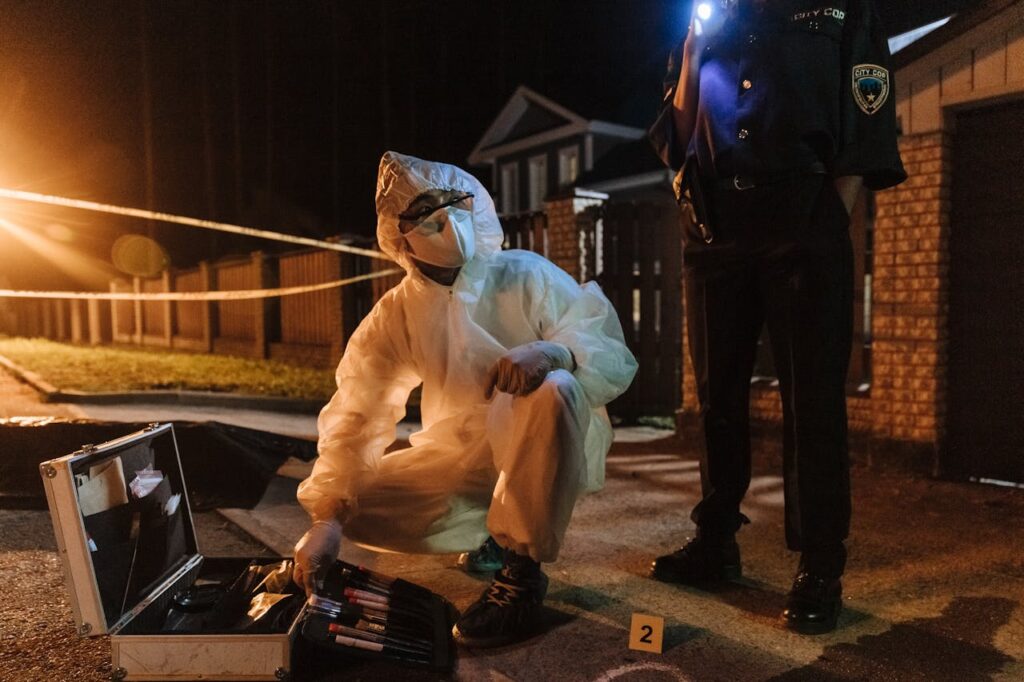
Yes. Collaboration is key in criminal investigations. Do the CSI work with detectives? Absolutely. CSIs work closely with law enforcement detectives to ensure that the scene is thoroughly processed and that all findings are accurately documented. While the CSI handles physical evidence, the detective pieces together the human narrative. When both professionals understand criminal behavior, their collaboration becomes more seamless and productive.
Choose the best degree for CSI to start your career strong with the right competencies!
Are you ready to start your career as a crime scene investigator? Explore the best degrees for CSI, understand the crime scene investigator education requirements, and take your first steps toward becoming a crime scene analyst with both the technical and behavioral expertise to truly make a difference. The ideal education program for CSI agents is a bachelor’s degree in forensic science, biology, chemistry, or criminal justice.
Related: Launch your criminology career with these forensic science scholarships
However, you will need to pursue a crime scene investigation specialization, obtain the right training and certifications needed to become eligible for entry-level CSI positions. Moreover, you must develop a deeper understanding of criminal behavior through criminology and criminal and forensic psychology courses. This will provide additional insights that can make crime scene investigation a bit easier.